
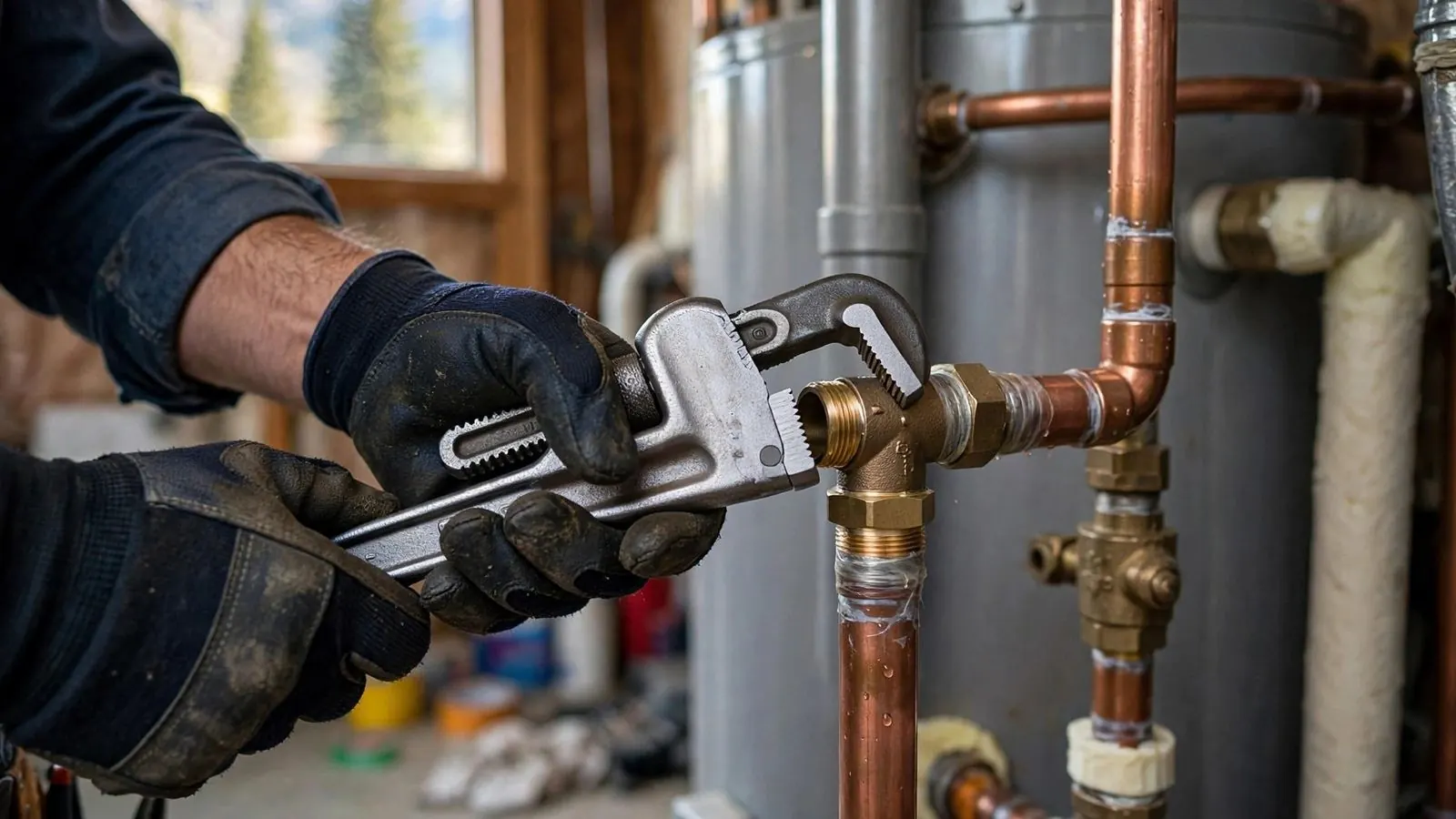
A water heater anode rod is a steel core wrapped in magnesium, aluminum or a zinc alloy that hangs inside the tank. Water attacks the rod first, because the rod is made of a more reactive metal than the tank steel. When the rod is used up, the tank starts to rust instead.
Water heater anode rod replacement in Dolton, IL is a maintenance job, not a repair of a failing tank. Cost depends on the job around the rod more than the rod itself, and we explain those factors below without quoting numbers that would not fit your house.
What decides the cost of replacing an anode rod
The part is small. The labor and the surprises are what move the total. We give a clear price before work starts, after we look at your heater.
Ask your insurance agent what your policy says about water heater leaks before you need to file. Want your real number? Call (773) 207-0518.
How a rod is checked and replaced
Homeowners can do this on an electric heater with care. Gas heaters need extra caution, and we handle those.
Turn off the power or gas
Switch off the breaker for an electric unit, or set a gas unit to pilot or off. Close the cold water supply to the tank.
Relieve pressure and loosen the rod
Open a hot tap upstairs to ease pressure. Use a socket, usually 1-1/16 inch, on the hex head on top of the tank. A breaker bar helps.
Inspect the rod
Lift it out slowly. If the core wire shows or the coating is mostly gone, replace it. A thick, pitted rod with plenty of metal left can stay.
Install and refill
Wrap the threads with thread tape or use the manufacturer's sealant, thread the new rod in, snug it, open the cold supply and run a hot tap until the air clears. Then restore power or gas.
Want someone to check the rod for you?
We can look at the heater, tell you if the tank is sound, and give a clear price before work starts.
Replace the rod or replace the heater
A new rod is cheap compared to a new tank, but it only slows rust. It does not repair a tank that has already corroded through.
A new anode rod makes sense when
- The heater is not leaking
- The old rod is thin, coated in scale or gone
- The tank is not rusty at the base
- You want to extend a sound tank
A new heater makes sense when
- Water pools around the base
- The tank walls rattle or rumble with sediment
- Rust shows at fittings or the drain
- The unit is old and repairs keep piling up
For a failing unit, read our page on water heater replacement. For a working heater with a stubborn issue, see water heater repair.
What Dolton water does to a tank
Dolton buys treated Lake Michigan water from the City of Chicago, and the 2025 Consumer Confidence Report lists chlorine between 1.0 and 1.4 ppm. The report does not give hardness for Dolton. That matters because mineral content affects how fast a rod is consumed and how much sediment settles in the tank.
So test your tap with a hardness kit before choosing a rod, and ask the village for its annual water quality report. A rod that lasts several years in one house can be used up faster in another. Check yours instead of assuming a schedule.
Source: Village of Dolton Consumer Confidence Report, 2025.
Which rod material fits which situation
Each rod trades price, life and side effects. A plumber can recommend based on your water and tank.
Magnesium
The most protective and the usual first choice. It wears faster and can smell in some water.
Aluminum
Lasts longer in some water but is not recommended where aluminum in water is a concern.
Aluminum and zinc
Used when a rotten-egg smell shows up from the heater. Zinc reduces certain bacteria reactions.
Powered rod
A small electric rod that does not wear away. It costs more and needs power.
Segmented flexible rod
Bends so it can go in where the ceiling is low. It does the same job as a straight rod.
When to stop and call a plumber
Do not remove a rod if the tank is already leaking. Do not use a torch or an open flame to loosen anything. Never force the hex head if it will not move, because a stuck rod can spin the tank fitting and crack the glass lining.
Gas heaters add a safety step. If you smell natural gas at any point, leave the building, then call Nicor Gas at 888-642-6748 or 911 before calling a plumber. Water heaters also have a temperature and pressure relief valve that should never be capped or blocked.
What an anode rod does not fix
A fresh rod will not fix a tank that is leaking, a burner that will not light, a heating element that has burned out or a pilot that keeps going out. It also does not remove sediment, which collects at the bottom of the tank and makes a popping noise when the burner or element heats.
If hot water runs out fast or the tank rumbles, flush the tank and check the elements or burner. If the problem continues, a plumber can test it. The rod just protects the tank steel while the water does its work.
Serving nearby towns
We cover ZIP 60419 and surrounding towns from 1205 E Sibley Blvd. Homeowners in Calumet City and Riverdale call us when they want a rod checked before a tank gets too old.
Landlords with several units can book heater checks together. We can often schedule a same-day appointment when available, and we explain the work before it starts.
What the manufacturer guidelines and codes say
According to most manufacturer manuals, the anode rod is a sacrificial part that corrodes so the tank does not, and the manual for your model sets the inspection interval. Follow that guideline rather than a generic number from a forum.
Draining and opening a gas or electric tank involves the relief valve, the gas control and the power, so it falls under the Illinois Plumbing Code (77 Ill. Adm. Code 890) and the maker's safety instructions. Turn off power or gas first, and call a licensed plumber if any step is unclear.
Sources: manufacturer manuals, 77 Ill. Adm. Code 890.
Questions readers ask
There is no single schedule. Many plumbers suggest looking at it every few years, then replacing it when the coating is mostly gone. Your water and the tank size change the timing.
Only if the tank is still sound. A rod slows future rust. It does not repair rust that is already there.
That smell usually comes from bacteria reacting with a magnesium rod in warm water. It is not unique to Dolton. A plumber can switch the rod type or flush the tank.
Normally no, because you are not replacing the heater or changing piping. Permit rules vary, so ask the Dolton building department, Housing and Permits, at 708-201-3261 if you are unsure.
Measure from the top of the tank to the ceiling. Most rods are about as long as the tank is tall, so a low ceiling needs a segmented rod.
If the tank leaks or is badly corroded, do. If the tank is sound and the rod is spent, a new rod costs far less than a new heater and can extend its life.