
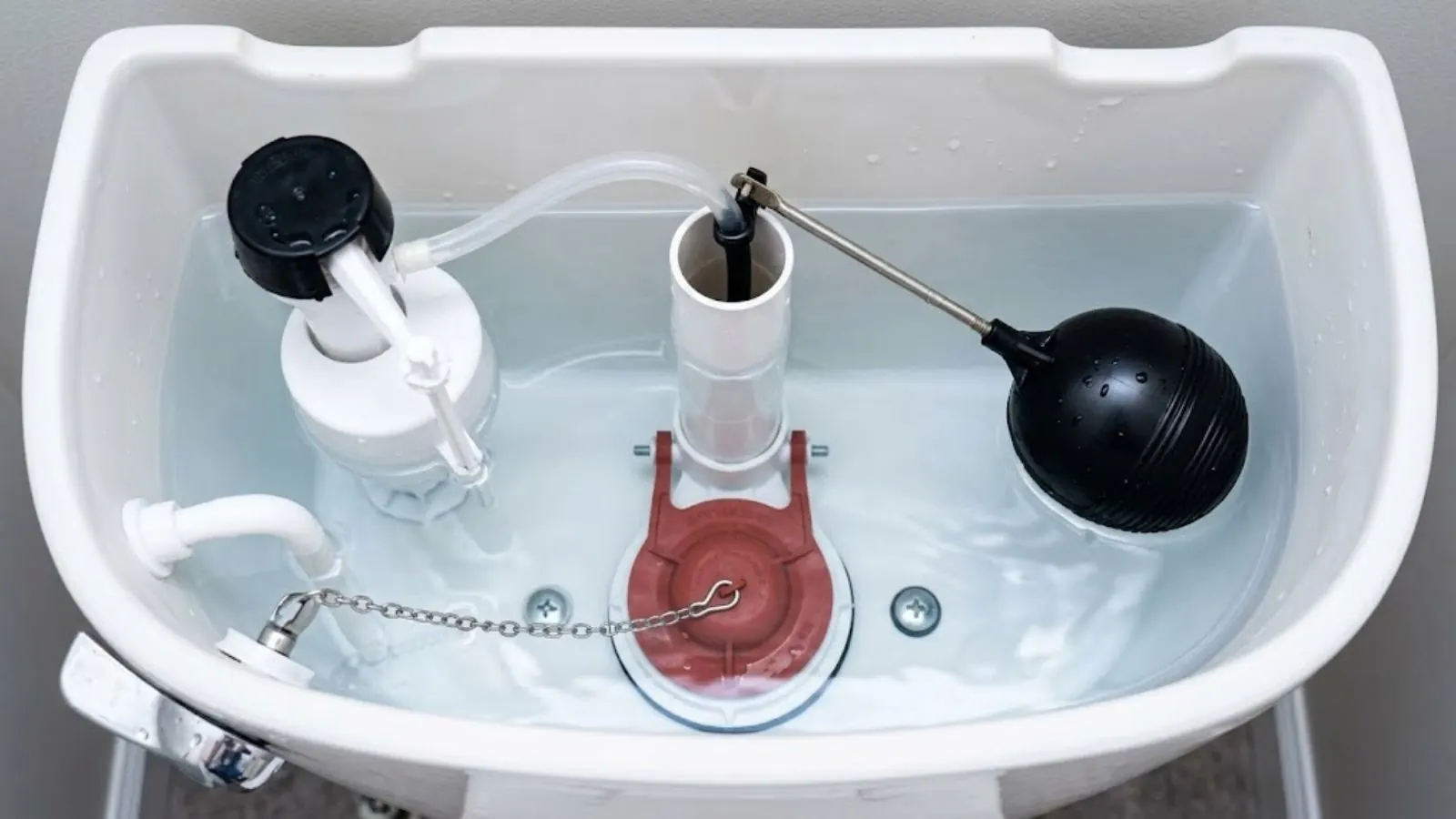
To install a flapper in a toilet tank, you shut the water off, drain the tank, unhook the old flapper from its two ears at the base of the overflow tube, hook the new one on, and set the chain. That is the whole job in Dolton, IL or anywhere else. The tricky part is buying the right flapper and knowing whether the flapper was even the problem.
A flapper lifts when you flush, lets water drop into the bowl, then falls back and seals the opening. If it leaks, the tank slowly empties and the fill valve keeps topping it up. That is the sound of a toilet running at 2 a.m.
Confirm the flapper is the culprit first
Before you spend money, run two quick checks. They take five minutes and save a wasted trip to the hardware store.
- Drop a few drops of food coloring in the tank and wait 15 minutes without flushing
- If color shows in the bowl, the flapper or its seat is leaking
- Press down on the flapper by hand and listen for the running to stop
- Look at the water level, which should sit about an inch below the top of the overflow tube
- Check the chain for slack that gets caught under the flapper
Two inch or three inch flapper
Flappers are not universal. The drain opening in the tank bottom comes in two common sizes, and a mismatch will never seal.
Two inch flush valve
- Found on most older toilets
- Opening measures about 2 inches across
- Flapper has a smaller rubber disc
- Uses less water per flush as a rule
Three inch flush valve
- Common on many newer and high-performance toilets
- Opening measures about 3 inches across
- Flapper has a wider rubber disc
- Drops water faster for a stronger flush
Measure the opening before you shop, or take the old flapper with you. Some toilets use a flapperless canister or a tower flush valve, and those need a different part. If yours is one of them, call for toilet repair rather than guessing.
Install the new flapper in four steps
Lay a towel on the floor and keep a bucket nearby. You do not need tools.
Shut the water and drain the tank
Turn the oval handle on the supply line, near the floor behind the toilet, clockwise until it stops. Flush once to empty the tank.
Remove the old flapper
Unclip the chain from the flush lever arm. Slide each side of the flapper off the small pegs on the overflow tube. Some flappers have a ring that slips around the tube instead.
Wipe the seat and fit the new one
Rub the plastic seat with a damp cloth to remove slime and mineral film. Attach the new flapper to the pegs and make sure it drops flat over the opening.
Set the chain and test
Clip the chain so there is about half an inch of slack when the flapper is closed. Open the supply, let the tank fill, flush a few times and watch for leaks.
Toilet still running after a new flapper?
A pitted seat, a bad fill valve or a worn flush valve need more than a rubber part. We will find out which.
Why rubber parts wear in Dolton tanks
The Village of Dolton buys treated Lake Michigan water from the City of Chicago, and the 2025 Consumer Confidence Report lists a chlorine range of 1.0 to 1.4 ppm. Chlorine keeps drinking water safe to move through pipes, and it also slowly stiffens and warps rubber that sits in it for years.
That is why a flapper that looks fine can stop sealing. If the old one feels slick, curled, sticky or hard, expect to replace it every few years. The report does not give hardness, so test your tap with a kit before blaming mineral buildup. For bill questions, ask the Dolton Water Department at 708-201-3293.
Source: Village of Dolton Consumer Confidence Report, 2025.
If the toilet still runs, check this next
A new flapper fixes the most common cause, not the only one. The table shows the next suspects.
| Symptom | Likely cause | Fix |
|---|---|---|
| Water spills into the overflow tube | Fill valve set too high or failing | Lower the float or replace the fill valve |
| Tank refills every few minutes | Flapper leak or worn seat | New flapper, clean or replace the seat |
| Hissing after the tank is full | Fill valve not shutting off | Replace the fill valve |
| Flush handle sticks down | Chain too short or lever bent | Reset the chain, replace the lever |
| Water on the floor around the base | Wax ring or supply connection | Stop using it and call a plumber |
Chain length is where most DIY flapper jobs go wrong
A chain that is too tight holds the flapper slightly open, so the toilet runs forever. A chain that is too loose gets under the flapper and keeps it from closing. Aim for about half an inch of slack, roughly the width of a pencil, when the tank is full.
Cut off any extra chain, or tuck it so it cannot fall under the flapper. If you flush and the flapper closes too quickly, your toilet may be short on flush volume. Look for a chain that attaches higher on the lever arm, or try a slightly longer one.
What a new flapper will not fix
A flapper only controls the flow from the tank to the bowl. It will not fix a clogged toilet, a weak flush from blocked rim jets, a rocking bowl or a leak at the floor. A cracked tank or bowl cannot be repaired with any part from the aisle.
If the water level never stops rising in the bowl, close the supply valve and call. If a worn shut-off valve will not turn, do not force it, because the stem can snap and flood the room. That is a small job for a plumber, and we also handle plumbing installation when a valve or fixture needs replacing.
Reading the toilet before you buy parts
Look inside the tank first. If the tank has a tall plastic tower in the middle instead of a flapper, it has a canister fill and flush assembly. Read the brand and model stamped inside the tank or under the lid. Photograph the old flapper next to a ruler.
Buy a flapper with the same number of connection points. Some flappers have two ears, others a rubber ring, and a few have an adjustable float arm. A universal flapper is fine if the opening size matches, but a brand-specific part usually fits better.
Neighbors around Dolton
We cover ZIP 60419 in Dolton and the surrounding towns. Homeowners in Riverdale and South Holland call us for running toilets, wobbly bowls and worn supply lines.
Landlords with several units can book a visit for one or more toilets. We can often schedule a same-day appointment when available, and we state the price before the work begins.
Parts standards and water-use guidance
Flappers are not universal. The standard sizes are 2 inch and 3 inch, and the right one depends on the flush valve opening in your tank, so measure before you buy. A mismatched flapper is the most common reason a new one still leaks.
According to the EPA WaterSense program, a labeled toilet uses no more than 1.28 gallons per flush, so a silent leak from a worn flapper can waste far more water than the toilet was designed to use.
Sources: EPA WaterSense program, standard flush valve sizes.
Questions readers ask
A common range is several years, but it varies by the rubber and the water it sits in. Replace it when you see curling, slime, a sticky feel or a leak in the dye test.
A small leak can pour many gallons a day, and you will not see it. A rise in your water bill with no change in habits is worth checking. Ask the Dolton Water Department at 708-201-3293 about billing.
Avoid it. Tablets sit against the rubber and can shorten the life of the flapper, the chain hardware and the fill valve. Clean the tank with vinegar and a brush instead.
Check that the chain gives the flapper enough lift and does not catch. A weak flush can also come from clogged rim jets or a partly closed supply valve.
Usually not. Turn the supply valve off at the wall and the running stops. Call a plumber if water overflows the bowl or leaks at the floor.