
Natural remedies for clogged drains are the home fixes that avoid caustic chemicals: hot water, a plunger, baking soda and vinegar, a hand auger and a bit of dish soap. Some of them work well on a Dolton, IL sink or tub with a fresh clog. Others are mostly folklore. We rank them by what we see in real houses, then show where they stop.
The honest rule is simple. A clog in a single fixture is a fair try for a home fix. A clog that affects several fixtures is a different problem, and no kitchen trick will reach it.
Home fixes ranked by how well they work
A rough ranking for a single sink, tub or shower.
| Remedy | Works on | Honest rating | Watch for |
|---|---|---|---|
| Cup plunger | Sink and tub plugs | Best first try | Needs a seal and a covered overflow |
| Hand auger or plastic hair tool | Hair in a tub or shower | Very good | Do not force past a bend |
| Hot tap water and dish soap | Grease film in a kitchen sink | Fair | Boiling water can crack porcelain or soften PVC |
| Baking soda and vinegar | Light odors and film | Weak on real clogs | Not a substitute for a plunger |
| Wet-dry shop vac | Standing water plug | Situational | Only on a fixture you can seal |
Try these in this order
Order matters. Start with the least risky tool.
Plunge properly
Fill the sink with enough water to cover the plunger cup, block the overflow with a wet rag, and push down and up about ten times with steady pressure.
Pull what you can see
Remove the stopper or strainer and fish out hair. A plastic barbed strip costs little and reaches the trap.
Flush with hot tap water
Run the hot tap for a minute with a squirt of dish soap. Tap hot is enough. You do not need boiling water.
Use a hand auger last
A small hand auger can break up a clog in a trap or a short branch. Stop if it will not advance, and do not force it.
Plunger did nothing?
Call the 24/7 line. If more than one fixture is slow, a plumber needs to look at the line.
The baking soda and vinegar story
Pour baking soda, then vinegar, and the foam fizzes. It looks like it is working. In a drain, the reaction is brief and mostly makes mild salty water. It can freshen a trap, and it may loosen a thin film, but it does not dissolve a hair wad or a plug of grease.
The usual harm is wasted time. A sink that stays blocked after a baking soda session gets more stagnant, which worsens the smell and delays the real fix. If you want to try it, do it once, then go on to the plunger.
Stop and call a plumber if
These signs mean the clog is past what a home remedy can reach.
- More than one fixture is slow or backing up at the same time
- The toilet bubbles when the washer or a sink drains
- A floor drain in the basement burps or overflows
- Water comes back up after you have cleared the sink twice
- There is a sewage smell, not food or soap
- The auger snaps, jams or meets hard resistance
Basement drains and heavy Dolton storms
The Cook County hazard mitigation plan for Dolton says repetitive basement flooding hits several neighborhoods, and some of it happens when the sewer backs up in heavy rain. If your basement floor drain rises during a storm, a plunger is the wrong tool. The water is not coming from a clog in your sink.
For that case, move belongings up off the floor, stay out of standing water near outlets and call us. Village sewer problems go to Dolton Public Works at 708-201-3280.
Source: Cook County hazard mitigation plan annex for Dolton, 2024, and Village of Dolton Public Works page.
Plunger or auger for a bathroom clog
Both are fair home tools. They suit different clogs.
Reach for the plunger when
- Water stands in the sink or tub and drains slowly
- You can cover the overflow opening with a wet rag
- The clog is soft, such as soap and a little hair
- You want the lowest chance of scratching anything
Reach for the auger when
- The tub or shower fills with hair and soap
- The plunger moves water but the clog returns
- The trap is within about an arm of the opening
- You are willing to stop if the tool meets a hard stop
Neither tool belongs near a toilet that has a foreign object in it, which needs a plumber.
Prevention that actually helps
Put a mesh strainer in each tub and shower and empty it before it fills. Scrape plates before they hit the sink and pour used cooking fat into a can and not down the drain. Flushable wipes do not break down like toilet paper, so keep them in the trash.
Run hot water for 30 seconds after washing greasy dishes. A monthly enzyme product can help a kitchen line stay clear, though it will not rescue a stopped one.
When the cable machine is the right answer
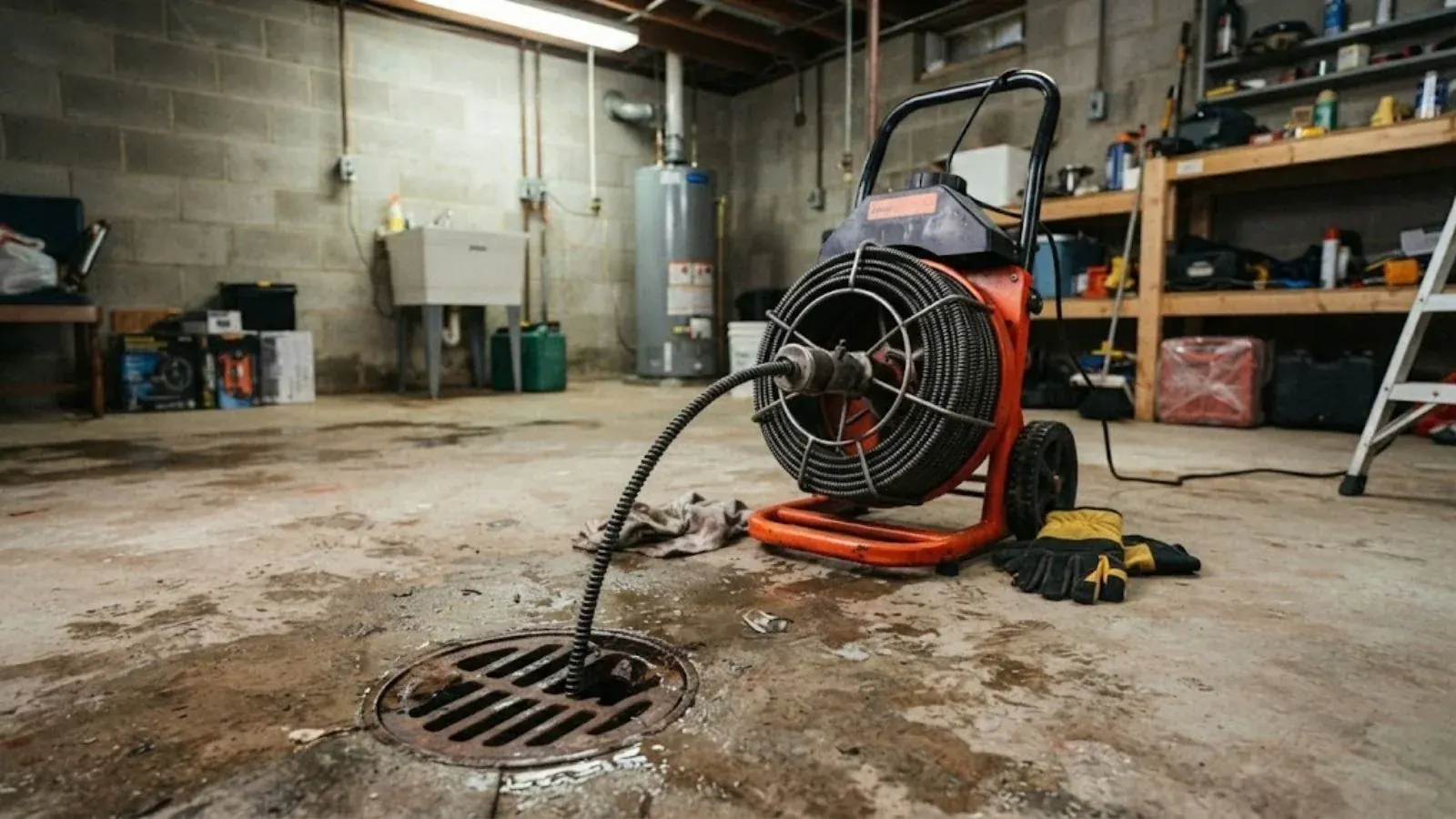
A hand auger reaches 15 to 25 feet at most and only in a straight shot. A plumber's machine reaches the main and the cleanout. Our drain cleaning visits begin at the closest access point, and our sewer line cleaning work handles main line blockages that start outside the walls.
If you do call, tell us what you tried, and how many fixtures are affected. It saves time and keeps the job from turning into a guess.
We serve more than one town
Dolton Express Plumbing is on Sibley Boulevard, and we also help homes in Calumet City and Harvey. The first four steps above apply anywhere.
What to do before you try a remedy, and when to stop
Home remedies are safe when you use them in the right order. According to the safety guidance printed on every chemical drain product, you should never mix products, so the same rule applies to household mixes. This checklist keeps a slow drain from becoming a bigger problem.
- Check whether one drain or several are slow, since several means a line problem, not a hair clog
- Use a plunger first and keep the water level low so nothing splashes
- Skip boiling water on old plastic pipe or cracked porcelain, and use hot tap water instead
- Never combine a store-bought chemical cleaner with a household mix in the same drain
- Stop and call a plumber if water backs up into a second fixture or the smell turns sewer-like
- If sewage is coming up a basement floor drain, stay out of the water and call right away
Questions readers ask
It can crack a porcelain sink and soften PVC pipe joints. Hot tap water is a safer choice and it handles most grease film.
It rarely clears a real clog. It may help with a light film or a smell. A plunger is more reliable.
Ten to fifteen firm strokes, then check. Repeat a couple of times. If the water level does not fall, move to the next step or call.
A closet auger made for toilets is the right tool. A regular sink auger can scratch the bowl. Stop if the toilet will not clear after a few tries.
Film may remain on the pipe wall, or a dry trap may let sewer gas up. Run water in unused drains and consider a cleaning.
We advise against it. The liquid can sit in a blocked pipe and splash back on a technician, so tell the plumber if you used one.