
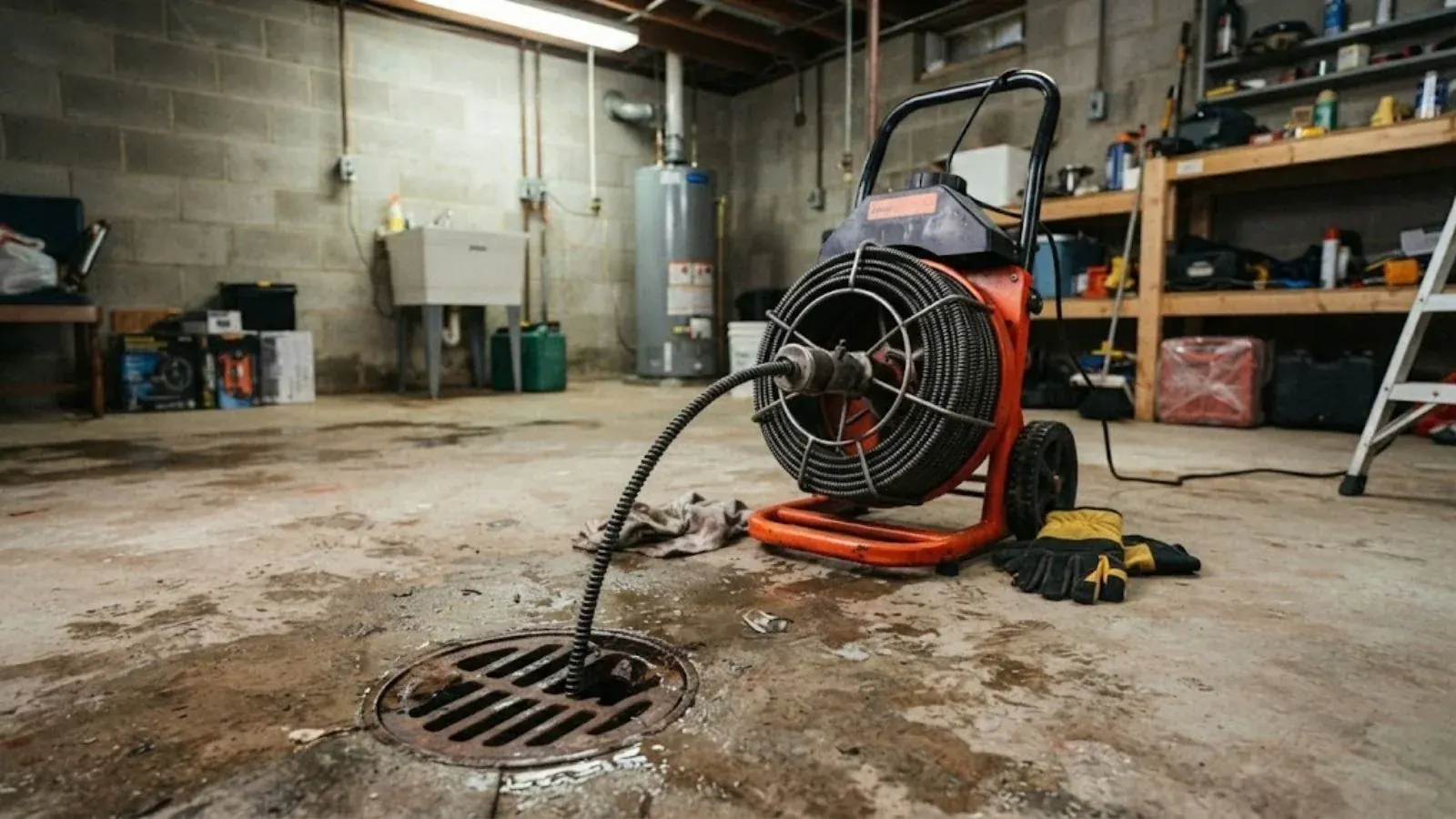
A natural enzyme cleaner for drains is a liquid or gel that holds bacteria cultures or enzymes. They feed on organic residue like grease, soap film, food scraps and hair oils, and slowly break it into smaller pieces that flow away. In Dolton, IL kitchens and bathrooms they work as a maintenance product, not a rescue product, and that difference decides whether you are happy with one.
The label may say "biological" or "bio-enzymatic". The idea is the same. You pour it in, leave it overnight and the microbes work while the pipe is idle.
What an enzyme product does and does not do
Think of it as digestion, not demolition. It eats slowly and only some things.
It can help with
- Thin grease film on a kitchen drain wall
- Soap scum and organic buildup in a slow sink
- Odors from food residue in the trap
- Gentle monthly upkeep in a line that has been cleared
It cannot help with
- Hair wads, wipes, cotton or a toy in the pipe
- Tree roots or a cracked, offset or collapsed pipe
- A fully blocked line holding standing water
- Mineral scale, paint or concrete
If the sink is already stopped, the product has no way to reach the clog, because the liquid just sits in the standing water.
Why timing and temperature matter
The microbes need contact time, usually six to eight hours. That means pouring at bedtime and not running water until morning. A kitchen drain that sees hot dish water every ten minutes will wash the product away before it does anything.
Heat kills the cultures. Pouring boiling water after the product defeats the purpose, and it is the most common mistake. Follow the label for water temperature, and use lukewarm water for a flush in the morning.
A sensible way to use one
If you decide to try an enzyme product, this routine gives it a fair chance.
Start with a flowing drain
Clear the sink with a plunger first. Enzymes digest residue, they do not move a plug.
Measure and pour at night
Use the amount on the label. Pour it straight into the drain opening, not onto the sink floor.
Leave it alone for hours
No water, no disposal, no dishwasher until morning. The time is where the work happens.
Repeat weekly for a month
One dose rarely clears a built-up line. Monthly upkeep follows once the drain runs freely.
Tried everything and it still gurgles?
Call the 24/7 line. We will check whether the clog is on your side or farther down the line.
Enzymes, cable and jetting side by side
A fair comparison, since none of these is the best at everything.
| Method | Best for | Speed | Limit |
|---|---|---|---|
| Enzyme cleaner | Slow grease and soap film upkeep | Hours to days | Cannot open a full blockage |
| Drain cable | Hair, wipes, a plug in one line | Minutes | May leave film on the pipe wall |
| Hydro jetting | Grease, scale, root fines in a main | An hour or so on site | Not for a broken pipe |
| Camera inspection | Repeat clogs of unknown cause | Short visit | Shows the problem and does not clear it |
Septic tanks and older pipe
Enzyme products are often marketed for septic systems. Most Dolton homes sit on village sewer, so that is not the usual question. If you do have a septic tank, ask the tank service before adding anything biological.
For older pipe, the gentle chemistry is a plus. A strong caustic drain liquid can attack some fittings, and enzymes do not. That does not mean they fix a pipe that is already rough on the inside, which is where cable or jetting comes in. Our drain cleaning team starts with the lightest tool that will reach, and our hydro jetting option covers the scrubbing a bottle cannot.
Heavy rain changes the question
Cook County's hazard plan for Dolton says repeated basement flooding happens in several areas, some of it when the sewer backs up in severe rain. If the basement drain bubbles during a storm, no enzyme product can help, because the water is arriving from the sewer side, not from a greasy trap.
In that case, call Dolton Public Works at 708-201-3280 about the village sewer and call a plumber about your own line. We check yours with a camera and tell you which side the problem is on.
Source: Cook County hazard mitigation plan annex for Dolton, 2024, and Village of Dolton Public Works page.
Reading a product label before you buy
Labels vary a lot, and a few details tell you whether a bottle is worth the shelf space.
- Look for live bacteria or named enzymes, such as lipase for fats and protease for proteins
- Check the stated contact time, which should be hours and not seconds
- Confirm it is rated for your drain type, such as kitchen, tub or toilet
- Note any warning about bleach, caustic cleaners or boiling water
- Check the storage and expiry date, since cultures weaken with age
- Ignore claims that it clears a fully stopped drain overnight
When to stop pouring and call
Stop if water is standing in the sink for more than a few hours, if two fixtures are slow at once, if the toilet bubbles when the washer drains or if the smell is sewage and not food. Those point at a blockage product labels will not reach.
Neighbors in Riverdale and Harvey call us for the same reason, which is a bottle on the shelf and a drain that still does not move.
Label guidelines and when to stop
According to the product labels on the common enzyme and bacterial drain products, they are intended for slow drains and regular maintenance, not for a drain that is completely blocked. Read the label for the dwell time and the temperature of water to use, because hot water can kill the bacteria the product relies on.
Never mix a cleaner with another drain product, and stop if the water level is not moving after the stated time. A fully blocked line is a job for a cable or a camera, and a sewer problem outside the house belongs to Dolton Public Works at 708-201-3280.
Sources: manufacturer product labels, Village of Dolton Public Works.
Questions readers ask
Generally yes. The cultures do not eat metal or plastic. Always follow the label and never mix products.
Expect several hours for one dose and a few weeks of regular use on a built-up line. If nothing changes after two or three doses, the clog is not organic residue.
Not right away. Leftover chemical can kill the bacteria, and mixing products is a safety risk. Flush the drain well and wait, or ask a plumber.
No. Roots are woody and live outside the pipe. A cutter on a drain machine or a repair is the remedy.
They can help a smelly trap that has dried out or collected organic film. They cannot stop sewage from rising during a storm.
Natural on the label is a marketing word. Look at what the product contains and how it says to use it, and judge it as a maintenance product.